
TicketNetwork
TicketNetwork IncEvents
4.034.00 Reviews
- Version
- 4.5.5
- Installs
- 10.00K
- Age Rating
- Everyone
Screenshots
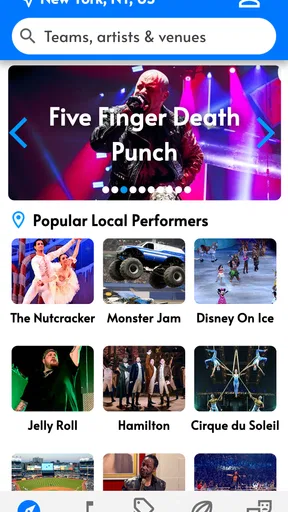
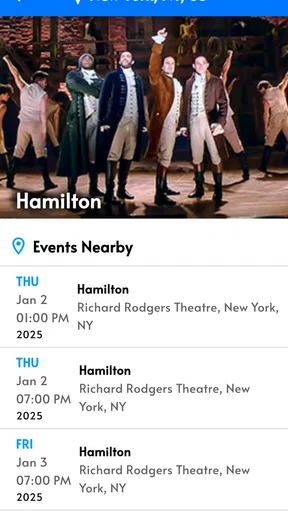
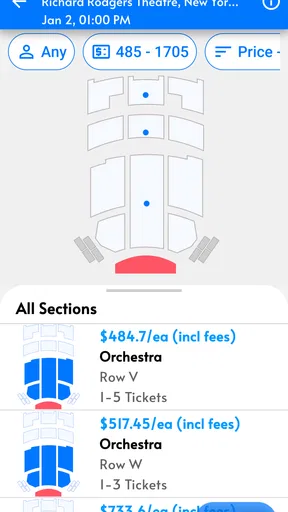
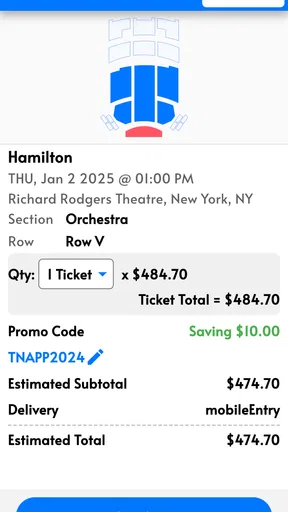


Our Review of TicketNetwork
 Analysis by Appyee
I came to TicketNetwork with a familiar problem: finding tickets for a live event without jumping between several unrelated pages. As an Events app covering sports, concerts, and theater, it aims to put that search in one place. My first impression was practical rather than flashy. The app is free, the layout is focused on browsing, and the useful question is quickly clear: can it help me move from “I want to go” to a ticket choice without creating more confusion than it removes?
That makes TicketNetwork most interesting for people who are still comparing possibilities. If you already know the exact event, date, and seating area you want, a direct venue or team channel may feel more immediate. If you are flexible and want to explore what is happening, compare event types, or check several possible dates, the app has a more natural role. I reviewed it as a tool for that complete journey, including the moments where information has to be handed from one screen, service, or decision to another.
From a vague plan to a specific event
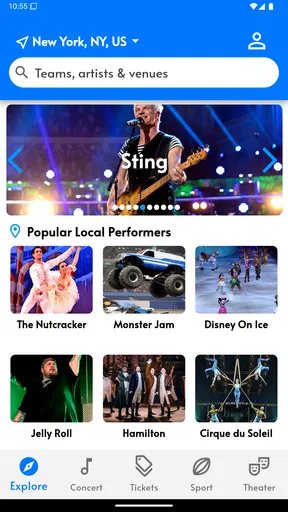
The starting condition matters more than it may seem. “I want to see a concert sometime this month” is a different task from “I need two seats for Saturday’s game.” TicketNetwork is better suited to the first kind of request because browsing is central to the experience. I can begin with a broad interest, narrow the search through the available event information, and then decide whether the result fits my schedule and budget.
For a sports fan, that can mean beginning with a team or competition in mind. For a concert, the starting point may be an artist, a city, or simply an open evening. Theater creates another kind of search because the same production may have several performances, each with different practical consequences. The app’s value is not just showing that events exist; it is helping turn an uncertain plan into a shortlist worth examining.
I also like that the app is not limited to one type of outing. A person who normally searches for games can use the same installed app when planning a concert, while someone arranging a theater night does not need a separate ticket-browsing habit. That cross-category usefulness is one reason it feels more versatile than a venue-only application.
At the same time, flexibility can create decision fatigue. A large range of possible events is helpful only when I am willing to compare. If I am under pressure and already know the exact official source I want, opening a broad marketplace may add an unnecessary step. TicketNetwork works best when discovery and comparison are part of the task, not when browsing itself is the problem.
How I move through the search
My workflow starts by choosing the kind of event I want, then reducing the possibilities until the remaining options make sense for the occasion. I pay attention to the event date first, because a promising listing is useless if it does not fit the calendar. After that, I consider location, event type, and the number of seats needed. This order prevents me from becoming attached to an attractive option before checking whether it is actually practical.
A useful habit is to treat each result as a candidate rather than an answer. I compare several listings instead of selecting the first familiar name. For a concert, I think about whether the priority is being close to the stage, attending on a particular night, or keeping the total manageable. For sports, I weigh the view against the atmosphere and the importance of the match. For theater, the performance time may matter more than a small seating difference.
This is where the app can save mental effort, but it does not remove the need for judgment. Ticket browsing is full of trade-offs that no search screen can decide for me. I still need to inspect the event details carefully, confirm that the selected date is correct, and understand what I am choosing before moving forward. The app helps organize the decision; it cannot make the decision personal.
One of my more useful approaches is to create a short mental shortlist before committing. I note the best option for convenience, the best option for the experience, and the best option for keeping spending under control. That simple three-way comparison is more reliable than sorting emotionally by the first result that looks appealing. It is especially helpful when planning with another person, because it gives the conversation a concrete starting point.
The handoff from discovery to purchase
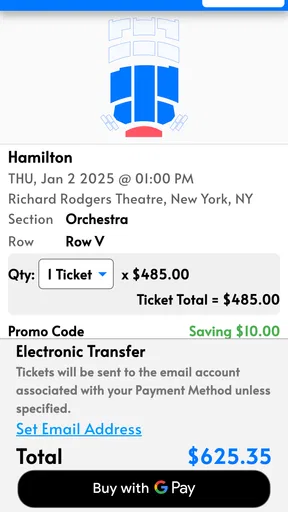
The most important handoff happens when casual browsing becomes a real purchase decision. Up to that point, I am exploring. After selecting an event and seats, I am responsible for checking the details with much more care. I look again at the date, venue, quantity, seating information, and the final amount shown in the purchase flow. A ticket app can make discovery feel easy, but the cost of a mistake becomes much higher once money and plans are involved.
This is also the point where I would avoid relying on memory. If I am coordinating with a friend, I share the exact event information rather than saying only “I found tickets.” The other person needs to know which performance or game I mean, how many seats are involved, and whether the choice matches what we discussed. That small handoff prevents a common real-world problem: two people agreeing to attend the same event but looking at different dates or seating options.
For a family outing, I would complete the comparison before involving children in the decision. First I would identify suitable dates and seating possibilities, then present a manageable choice. For a last-minute sports plan, I would do the opposite: confirm availability and timing quickly, then ask whether the group is comfortable with the remaining options. The app supports both workflows, but the user has to choose the right order.
Another practical tip is to keep the app as the reference point while comparing, rather than mixing half-remembered details from text messages, browser tabs, and screenshots. A screenshot can show a moment in time, but it is easy to confuse it with another listing. Returning to the selected event before purchase gives me a cleaner final check and reduces the chance of acting on stale notes.
What the result feels like in everyday use
Imagine a Friday afternoon when a friend suggests going out that evening. We do not have one fixed event in mind, only a preference for something lively and a limited window of time. I can use TicketNetwork to explore sports, concerts, and theater rather than searching each category separately. We narrow the options by timing and location, compare the remaining choices, and settle on the event that best matches the group.
In that scenario, the result is not simply a ticket. It is a clearer plan. The app helps transform an open-ended conversation into a concrete choice that can be discussed and checked. That is a genuine strength because many ticket searches fail before the purchase stage: people cannot agree on what to attend, when to go, or how much compromise is acceptable.
There is a second useful scenario involving a planned trip. I might know the dates of the trip but not the evening activities. Instead of building the itinerary around one event immediately, I can browse possible sports, concerts, or theater performances and then decide which one fits the rest of the schedule. This approach is more flexible than starting with a single venue and discovering later that the timing does not work.
The result is less satisfying when I already have a precise seat requirement. Someone who needs an accessible location, a particular section, or seats directly beside a group may prefer a source with highly specialized venue information. TicketNetwork can be part of the comparison, but I would not assume that a broad marketplace is automatically the best tool for every seating constraint.
Where the workflow becomes less comfortable
The main friction comes from the nature of ticket marketplaces: the first attractive option is not always the best final option. I have to slow down at the moment when browsing feels easiest, because the details that matter most are often the ones people skim. Date, event version, seat location, and total cost deserve a deliberate check. This is not a complaint unique to TicketNetwork, but it is important when deciding whether the app fits my habits.
Another limitation is that a broad event catalog can make the experience feel less direct than an official team, artist, theater, or venue app. Official channels may be preferable when I want announcements, venue guidance, membership benefits, or a relationship with one particular organization. TicketNetwork’s advantage is breadth and comparison, not necessarily the deepest connection to one event provider.
I would also skip it as my only tool if the purchase is highly sensitive to a very specific policy or venue requirement. In that situation, I would use the app to discover or compare, then carefully review the relevant purchase and event information before committing. The handoff to another source may be worthwhile when certainty matters more than convenience.
Because the app is free, trying it does not require a purchase commitment merely to browse. That makes it easy to use as an early planning tool. Still, “free” should not be confused with “risk-free”: the important financial decision happens when tickets are selected and purchased, so I would never treat the app’s no-cost installation as a reason to rush through checkout.
Who will get the most from it
I would recommend TicketNetwork to flexible event-goers, travelers planning an evening out, and groups that need to compare several possibilities before agreeing. It is also a sensible option for someone who attends different kinds of live events and wants one familiar starting point instead of separate searches for sports, music, and theater.
It is less compelling for a person who always buys directly from one venue or team and already knows exactly where to go. That user may value official account features or venue-specific information more than broad discovery. I would also be cautious about recommending it as the sole choice for buyers with unusually strict seating needs or a strong preference for one official ticketing relationship.
The app is rated for Everyone, which makes its general audience broad, but that does not mean every purchase decision is simple for every household. Adults should still guide younger users through event suitability, timing, and spending. The age label describes the app’s audience, not the practical responsibility of buying tickets for a group.
Performance, maturity, and everyday practicality
TicketNetwork was released on July 30, 2019, and the current version is 4.5.5. I see that maturity in the basic premise: this is not trying to turn ticket shopping into a social game or a complicated planning suite. Its role is straightforward—help me search through live-event possibilities and proceed toward a purchase.
The app comes from TicketNetwork Inc and has passed the early discovery stage with more than ten thousand installs. Its average rating is 4.0 from over a hundred ratings, with several dozen written reviews. I treat those figures as a useful sign that people are using and evaluating it, not as a substitute for my own judgment. Ratings can tell me whether an app is worth trying; they cannot tell me whether a particular event search will suit my plans.
On Android, the minimum requirement is version 8.0. That is helpful for users with older but still serviceable devices, although I would still keep the operating system updated where possible. A ticket app is most useful when I can rely on it during planning and when coordinating with others, so basic device stability matters more than decorative extras.
My recommendation after following the full journey
After using TicketNetwork as a complete workflow—from a vague idea, through event comparison, to the final decision—I see it as a practical discovery and comparison app rather than a universal replacement for official ticket sources. Its strongest moment is the middle of the process, when I know I want to attend something but have not yet decided exactly what, when, or where.
I appreciate the ability to approach sports, concerts, and theater from the same place, especially when planning with people who have different tastes. The app can shorten the path from an open conversation to a realistic shortlist. My main advice is to slow down at the handoff from browsing to buying, verify every important detail, and use a more specialized or official channel when a particular venue policy, seat requirement, or account relationship is the priority.
For me, that balance makes the app worth trying. It is free to install, accessible to a broad audience, and useful when the goal is to discover and compare live events. I would recommend TicketNetwork to a friend who wants options and needs help turning plans into a concrete outing. I would not recommend it blindly for every purchase, but as the first step in a thoughtful ticket search, it earns a place on my phone.
Best use: start broad, compare deliberately, and treat the final ticket details as a separate verification step. That habit brings out the app’s real strength while protecting against the friction that comes with any broad ticket marketplace.
Verdict
Strengths of TicketNetwork
- Large selection of tickets for sports, concerts, and theater events.
- Useful filters make it easier to compare events by date and location.
- Mobile access lets you browse listings and manage purchases on the go.
- Tickets may be available even when official box offices are sold out.
- Event details and seating information help with purchase decisions.
Limitations of TicketNetwork
- Prices can be higher than face value due to resale markups and fees.
- Final costs may not be clear until late in the checkout process.
- Ticket availability and listings can change quickly without notice.
- Some tickets may have restrictions, delayed delivery, or special conditions.
- Refund and cancellation policies may vary by event and seller.
Similar Picks in This Category
View All
Easy Quran Mp3 Audio Offline
Muslim Worldapp4.7

Invitation Maker: Cards & RSVP
Greetings Island4.9

StubHub - Live Event Tickets
StubHub4.3

Fever: Events & Tickets
Fever Labs4.7

Epic Freebie Games Radar
Arioch Pds - Apps & Games4.4

Invitation card Maker, Design
Splendid App Maker4.9
Frequently Asked Questions
What is TicketNetwork, and what can I use it for?
TicketNetwork is an online ticket marketplace where users can search for and purchase tickets to concerts, sporting events, theater performances, festivals, and other live entertainment. The platform brings together listings from professional ticket sellers, so available seats, prices, and delivery methods can vary depending on the event and seller. It is useful for comparing options in one place, but users should review all order details carefully before completing a purchase.
Is TicketNetwork an official ticket seller or a resale marketplace?
TicketNetwork generally operates as a secondary marketplace rather than the primary box office for every event listed. This means tickets may be offered by independent professional sellers and can sometimes cost more or less than the original face value. Before buying, check the seller information, seating description, event date, venue, and total price. Availability and pricing may change quickly, especially for popular or sold-out events.
Are TicketNetwork tickets guaranteed to be valid?
TicketNetwork provides a buyer guarantee for eligible orders, but the exact terms, exclusions, and remedies should be reviewed before purchasing. Tickets are typically covered against issues such as not arriving on time, being invalid, or not matching the advertised listing, subject to the marketplace’s policies. Keep your confirmation email and order information, and contact customer support promptly if there is a delivery or entry problem.
What fees and delivery charges should I expect when buying tickets on TicketNetwork?
Ticket prices shown during browsing may not represent the final amount you will pay. Service fees, delivery charges, taxes, and other applicable costs can be added during checkout, so it is important to review the complete order summary before submitting payment. Delivery options may include electronic tickets, mobile transfer, or physical delivery, and the available method depends on the event and seller.
Can I cancel or receive a refund for a TicketNetwork order?
Ticket purchases are commonly treated as final, and cancellation or refund options can depend on the event, seller, delivery status, and TicketNetwork’s current policies. Refunds may be available if an event is canceled or if a covered order problem occurs, while postponed or rescheduled events may follow separate rules. Read the order terms carefully before payment and contact support as soon as an issue arises.
